
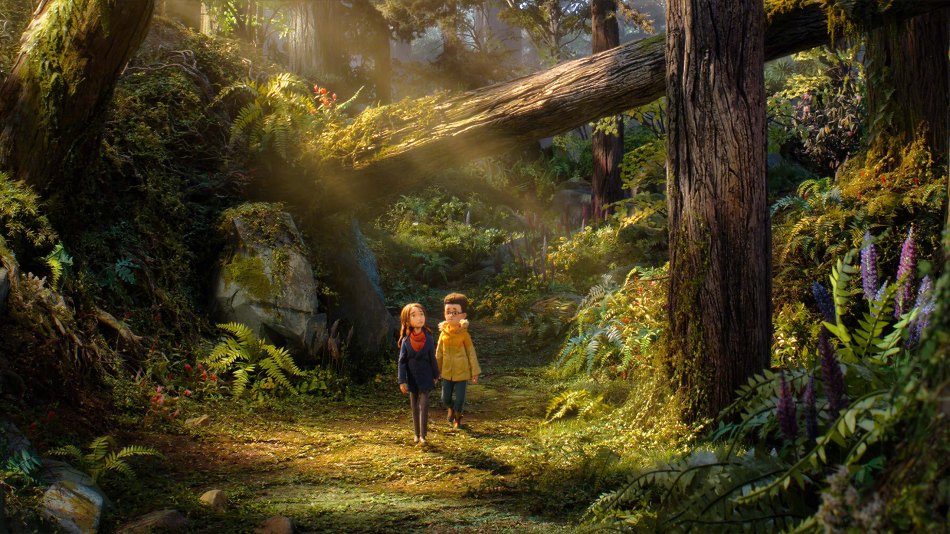
Wildwood is an awe-inspiring production. The sheer scale and scope of the film is something that leaves one astounded, a project that took multiple years – production began in 2021 – with countless people, puppets, and sets, brought to life, Wildwood is a testament to what human artists are capable of creating. The latest film from animation studio Laika and directed by studio head Travis Knight, Wildwood is an adaptation of the novel by Colin Meloy and Carson Ellis. A fantasy adventure story, it is set in Portland, Oregon, where young Prue (Peyton Elizabeth Lee) babysits her younger brother Mac and ignores her parents’ (Maya Erskine and Jake Johnson) orders not to take him outside. Prue discounts her father’s warnings about “magic” in the world, only to come face-to-face with it as a murder of crows fly down and scoop Mac up, carrying the crying infant into a mystical forest outside of Portland, known as the “Impassible Wilderness.” Prue and classmate Curtis (Jacob Tremblay), who she bumped into during her and Mac’s stroll through downtown, hurry across a misty, foggy bridge and into the woods where they encounter things they never thought possible.
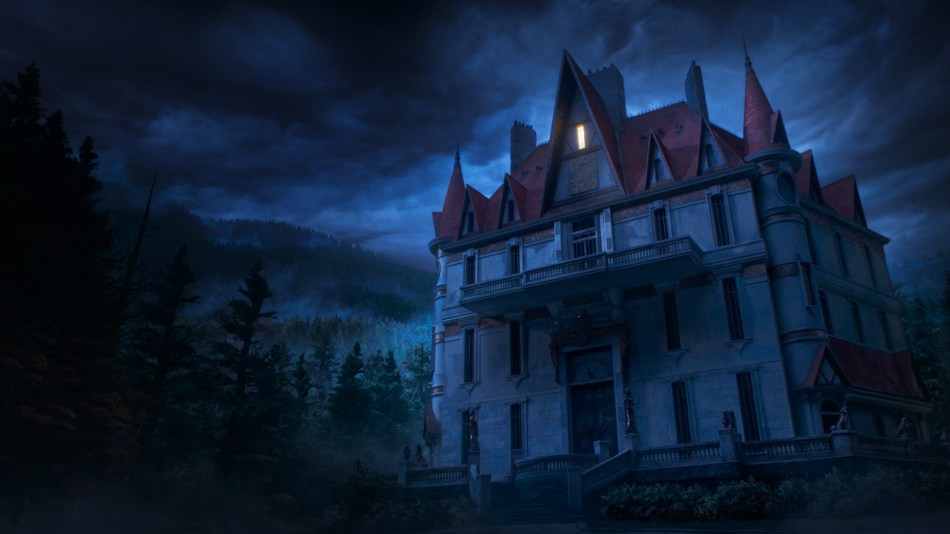
What draws one to Wildwood is its sense of wonder. A fairy tale such as this must transport the viewer to those worlds beyond, make them feel tangible and let them be swept up in the emotion and majesty of these characters and environments. Wildwood excels in this from the very onset, finding Prue and Curtis encountering a military troop in the woods that is made up entirely of talking coyotes. Narrowly escaping with their lives, the two young Portlanders are split up and find themselves on different but intersecting paths in this mythical land. Prue catches a ride with a delivery driver who brings her to a territory largely governed by humans, though they pass through the bird-owned territory and this town, known as “South Wood”, finds humans and animals walking and talking amongst one another. Curtis is captured by the coyote soldiers and brought to their leader, the dowager governess Alexandra (Carey Mulligan). She once ruled South Wood until the tragic death of her only son Alexei, thereupon she was consumed by grief, dabbled in black magic, and is now hellbent on bringing Alexei back to life by any means necessary.
There is a conflict brewing in this land, one set into motion when Alexandra set about filling the hole in her heart with darkness and one that the arrival of “outsiders”, Prue and Curtis, will accelerate. Knight’s sprawling epic of a film encompasses every reach of this wilderness, laying the foundation and devoting the necessary time to bring out the key combatants of this conflict, all while maintaining its pace and forward motion without dragging whenever it gets more expository. When dealing with so many key players and factions, it can be easy for a story such as this to get muddled, but Wildwood manages to sort them out soundly and clearly. It juggles these without ever losing its spirit or that sense of wonder, always maintaining these feelings around every corner. The story, its heart and lessons about grief, loss, and letting go, make this a potent fairy tale in its own right, but Wildwood’s celebration of culture, examination of corruption, and themes of parenthood, siblinghood, and kindness, make it into a truly warm embrace of film. Even as it gets dark – and it gets shockingly dark – Wildwood has a bracing humanity about it, infused into every animation and expression, and into every element of its story and characters.
When watching Wildwood, one can be struck by the fact that they are watching an animated film, not in an immersion-breaking way but rather in a, “I cannot believe this is animated,” way. From the very first scene as Alexandra races through her mansion to try to rescue Alexei from jumping off a balcony, the movements and sets transport the viewer to this world beyond. The real-life filming locations and settings around Portland are seamlessly interwoven with Laika’s meticulous stop-motion animation work. As Ray Harryhausen would in the 50s and 60s with his groundbreaking work in stop-motion, Wildwood makes the impossible possible and with refinements and new technology developed for this film, blurs the lines between what is and what is not real. That is not to say the film hides its animation, but rather that it makes its machinations seem genuinely alive and authentic.
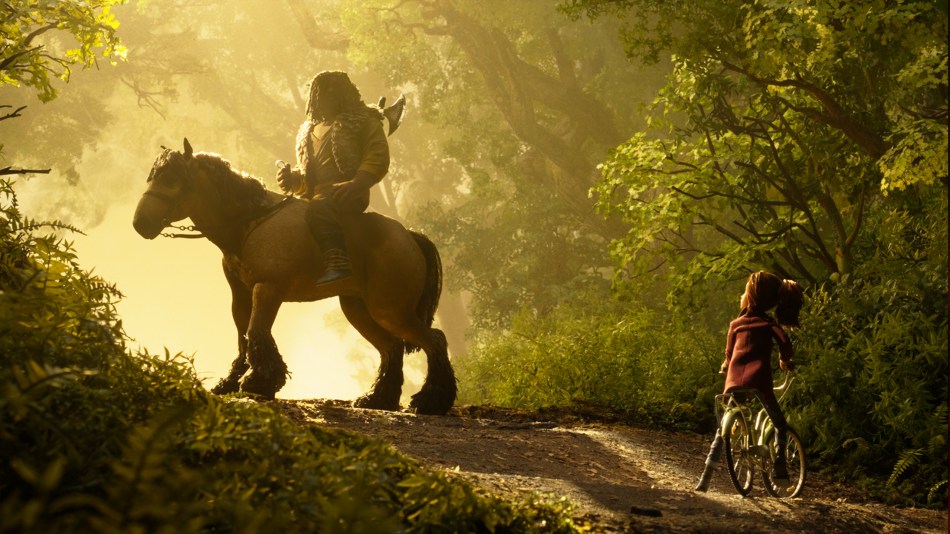
This brilliant animation work is headlined by the climactic battle scene, an intense, bloody, and sprawling endeavor with remarkable choreography that despite its numerous factions and entities involved is never incoherent nor unnecessarily disorienting. The intercutting of aerial scenes and the shift from the gorgeous greenery all around to the blood and fire engulfing Prue and her cohorts on the battlefield highlight the attention-to-detail, scope, and horror of it all. The lighting and color in Wildwood are both exemplarily executed, cinematographer Caleb Deschanel’s work is a stand out in highlighting the work of the animators and in crafting consistently striking compositions. A shot of the Bandit King (Mahershala Ali) silhouetted against the setting sun right before the battle is of particular note, adding an imposing and menacing nature to him – his image is exactly this to those who do not know him, making him a foreboding figure from a distance but a warm-hearted man up close – while also showcasing Deschanel’s remarkable ability to further breathe life into the animated setpieces.
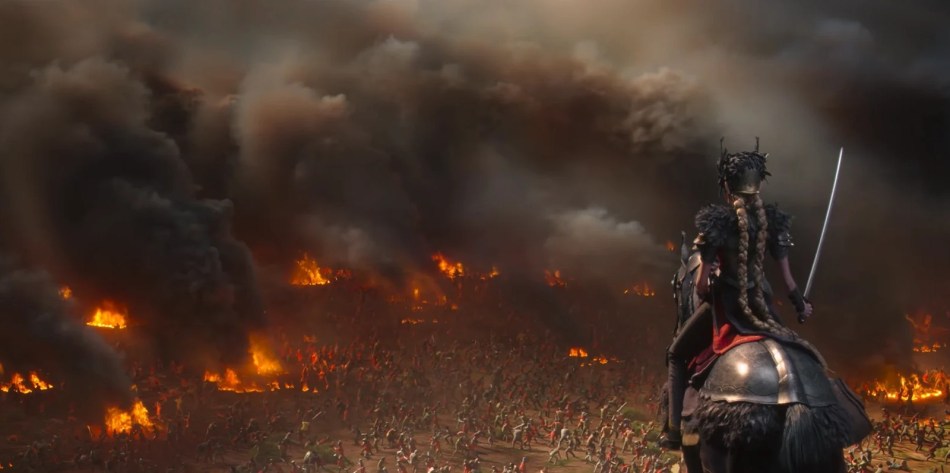
For as magical and wondrous as Wildwood can be, there is a darkness to it, a hard edge that is befitting its depiction of war and rebellion. It does not shy away from the brutality of its real life counterparts, delivering a film with a tone akin to Guillermo del Toro’s masterful Pan’s Labyrinth. Knight’s direction and embrace of this darkness is key, as is the voice cast’s. Carey Mulligan’s slithery performance as Alexandra bares the broken heart of a grieving mother, but also the wickedness that has seeped in, her twisty and conniving speech adding a menace to her every utterance. Mahershala Ali’s larger-than-life voice is a perfect match for the Bandit King, blending imposing physicality with a soothing earthiness that makes him such a compelling figure. His role as the leader of the opposing force to Alexandra, the man whose people are being forced from their home due to her encroachments and black magic is entirely believable due to his charisma and sturdy tone. Jacob Tremblay provides some great comedic relief as the goofy and nerdy Curtis, Awkwafina’s loyal rat Septima is a colorful and lively personality, and Jake Johnson really shines as Prue’s father with his warm, soft-spoken demeanor providing a level of comfort and quaintness. Peyton Elizabeth Lee is a particular find as young Prue, her voice having this magical quality to it that imbues Prue with a special quality. There is a stature, an aura to her performance that is particularly appealing, befitting the magical nature within Prue’s character – as she will discover, only those with “magic in them” can even see the bridge she initially crossed with Curtis, and it was not Curtis who saw the bridge – and lending Wildwood a wonderful foundation upon which its story and mood are built.
Blending heart, wonder, levity, and darkness, director Travis Knight’s Wildwood is a sprawling and breathtaking epic that redefines what is possible in animation. Pushing the boundaries and celebrating human-made art in a world that is increasingly forcing confrontations with AI concoctions and artlessness, Wildwood is an urgent reminder of this fragile artistry and a brilliant film in its own right. With the excellent stop-motion animation work, beautiful cinematography, and strong vocal cast, Wildwood immediately jumps to the top of the list of the best animated films of the year.
Discover more from Cineccentric
Subscribe to get the latest posts sent to your email.


0 comments on “Wildwood ★★★½”