

Parasite
By Carson Schilling
 Class warfare has quickly become one of cinema’s favorite themes to dissect and in 2019, there is no one better to do so than Bong Joon-ho. The Palme d’Or-winning Parasite is one of this year’s defining feature films and opens the door for so much discourse and conversation regarding everything from family ties to capitalism. Excellent performances from the entire cast make for one hell of a believable family dynamic and their development throughout this story is riveting. The cinematography from Kyung-pyo Hong is mesmerizing and works with Bong’s style to make for one of the surprisingly creepiest films of the year. There is not much I can say about this film that hasn’t already been said but I absolutely adore this style of filmmaking.
This movie is handled masterfully by Bong, as he tells his story in such an exquisite fashion. His direction is phenomenal and he works with the film’s environment in fascinating ways. Bong’s film is absolutely nothing that one would expect and this unpredictability ties into the message of class extremely fluently. The twist in this movie lends itself to transforming this story from practically a family comedy into a much darker and reflective look at human culture in this day and age. There is so much to adore about Parasite but the central theme I feel Bong would want us all to take away from this movie? Eat the rich.
Midsommar
By Carson Schilling
 Ari Aster’s sophomore feature is one that many people stuck in unfortunate relationships can connect with, although I desperately hope that nobody goes to such extreme measures in response to misfortune as in this film. Midsommar is one of my absolute favorites of 2019; not just for its wildly original form of horror storytelling, but for how simple Aster makes it look. This film is able to resonate with so many people due to its deeply emotional and romantically devastating themes that course through its veins. Aster’s ability to combine such a relatable story about toxic relationships with genuinely chilling cult-like horror is unmatched and thanks to his own personal breakup experience, even comes off as oddly personal.
Midsommar is also one of the most gorgeous films I have seen this entire year. The bright setting of Sweden not only serves as an eerie reminder that terror also exists in the sunlight but for director of photography Pawel Pogorzelski to work his expansive magic. The long takes and hallucinogenic feeling that the audience gets from this film slowly but surely creeps into you and Midsommar is not afraid to keep you at suspense until the very end. This is also due in part to Florence Pugh, whose performance as Dani Ardor is my favorite of 2019. The way that she embodies this broken soul and exhibits catharsis is fascinating to watch unfold. All of these elements work in harmony with Aster’s script to make one of the most deliriously anxious films of the year.
Dark Waters
By Kevin Jones
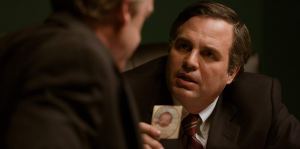 The latest film from director Todd Haynes, Dark Waters follows as Robert Bilott (Mark Ruffalo) leads the legal fight against DuPont regarding chemical contamination. It may, on the outside, seem like a director-for-hire gig for Haynes as a trite legal thriller about the little guy fighting a big company, but it is so much more. Haynes infuses it with rich themes about small-town America and family. He unfolds Dark Waters as though it were a horror film with each successive layer revealing yet another insidious and wicked attempt by DuPont to cover up what they knew. Ruffalo’s impassioned performance shows why this is the perfect starring vehicle for him, possessing a righteous rage. Bill Camp and Victor Garber are terrific in smaller roles, especially Camp as a farmer fighting for his family to be saved from the poisonous Teflon. DP Edward Lachman turns in one of his finest performances, helping to craft a unique visual palette for Dark Waters that is both crucial in designing Bilott’s world as well as striking the cold, brutal mood of the film. While not quite to the level of Far from Heaven or Carol, Dark Waters is nonetheless one of the finest films of 2019 and one that strikes a balance between filmmaking skill and informing its audience about the vile corruption at DuPont.
The Irishman
By Nick Adrian
 The announcement of renowned filmmaker Martin Scorsese’s new film was a big deal: it was his return to the crime genre, it reunited him with several of his most key players, and it would make use of innovative de-aging technology. However as the release date came ever closer – it was his second to find a home on Netflix this year – his comments toward superhero films and mainstream filmmaking in general kept Scorsese’s name on everyone’s minds. Whether the publicity hurt the view count of his film didn’t matter because either way, he won. The Irishman, easily mistaken for another venture into the mob for Scorsese, proves to be much more, instead ruminating on what it’s like to live a guilt-worthy life of sin. It’s heartfelt, touching, and devastating – the work of a filmmaker who is fully aware that there is not much life left ahead of him.
Through multiple decades, Frank Sheeran (Robert De Niro) makes his way through Russell Buffalino’s (Joe Pesci) Pennsylvania crime family and eventually becomes the first hand of powerful Teamster Jimmy Hoffa (Al Pacino). The majority of its epic runtime is reminiscent of Scorsese’s prior ventures into the genre such as Goodfellas or Casino, but the heart of the film lies within its third act. This is where Scorsese sets The Irishman apart from the typical gangster picture, eventually opting to focus on the regrets that come with a life of crime after that life is no more. With this comes some of his tightest direction, guiding career-best performances from his leads as well as a misunderstood supporting role from Anna Paquin. Through its epic runtime, Scorsese crafts a film whose mediation on guilt, betrayal, neglect, and friendship cement him with yet another masterpiece to close out the decade.
Uncut Gems
By Henry Baime
 A stressful but rewarding experience, Uncut Gems is a period piece that takes place only seven years ago. It provides a compelling portrait of a jewel dealer’s struggles to reconcile his gambling addiction and debts with his crumbling family life and his Jewish faith in a dirty and sleazy New York. Adam Sandler gives his best performance in years, and maybe his best ever, as the film’s lead, Howard Ratner, as he draws on his past characters’ propensity for being annoying yet endearing and loveable even while trying so hard to be despicable. The Safdie Brothers prove once again they are one of the most exciting directing duos today with this adrenaline rush of a crime film, and I cannot wait to see what they do next.
Once Upon a Time in Hollywood
By Ian Floodgate
 The thing I like most about Quentin Tarantino‘s Once Upon a Time in Hollywood is how it is a wonderful homage to the films and television of the 1960s. The retro look that cinematographer Robert Richardson uses in various shots is reminiscent of that period and the audience sees Hollywood as how they might imagine it, as the city of stars is shown in colours of sky blue and sunset yellow. Of course, the performances of the central cast particularly Leonardo DiCaprio as Rick Dalton and Brad Pitt as Cliff Booth are delightful to watch, and they also exhibit great acting chemistry with each other. As a whole, Once Upon a Time in Hollywood once again shows us why people love Tarantino’s work.
Shadow
By Eugene Kang
 It’s frankly stunning that Zhang Yimou has not made a film on the Chinese classic ‘Romance of the Three Kingdoms’ before Shadow. The operatic, expansive book is a perfect fit for his lush, overstuffed style that makes manifest the real intentions of his characters even when they are acting perfectly civil. Here, Zhang’s main palette is black and white, the yin and the yang, and somehow he is able to make a movie with these seemingly limited hues the most gorgeous piece of visual art to grace screens this year. No scene in any movie this year was as visually striking as the assault on the fortress using… metal umbrellas. Shadow‘s narrative is probably too convoluted for Western viewers who are largely unfamiliar with ‘Three Kingdoms’, but Zhang still manages to convey the depth of the story and the mythical nature of its characters through not just the visuals but through the intense performances and the sound design that makes this fantastical world seem very tactile and real.
The Farewell
By Eugene Kang
 Lulu Wang’s film, originally a story for NPR’s This American Life about the value of deception, about how her family chose to conceal from her grandmother that she had stage IV lung cancer, became one of the most sneakily culturally relevant movies of this year. In its first weekend, it made more money per theater than any other movie released this year in America, including Avengers: Endgame.
There have been countless testimonies of Chinese and families of Asian descent doing something similar to Wang’s family, or just responding to the familiarity of the family dynamics. Yet the real genius of this film is how it reveals how so much of what we do and say is predicated on lies. When those lies are old and practiced enough, it becomes tradition, culture, the norm- whatever you can call it. Wang’s sharp eye for these seemingly very culturally specific details is what makes this movie universal. This is also a real American story, despite what some voting bodies would think, in that being American is about having your identity constantly challenged, just like Billi’s (Awkwafina) is when she is faced with a family decision that she has no context for and struggles to understand. Many Americans resist this challenge, and this resistance manifests as politely willful ignorance at its best and xenophobia and racism at its worst. The Farewell has a much more measured view of the situation, but it also has a profoundly human heart at its center.
Discover more from Cineccentric
Subscribe to get the latest posts sent to your email.
 Cineccentric
0 comments on “Film Favorites From 2019”