

Motor City is a nasty and gritty throwback thriller from director Potsy Ponciroli. Playing like an exploitation or B-movie from the 1970s, Motor City follows blue collar worker John Miller (Alan Ritchson) in 1977 Detroit. He is a war veteran, trying to make a living in this hard luck city. He has fallen in love with Sophia (Shailene Woodley), the ex-girlfriend of local gangster Reynolds (Ben Foster), an act that will soon cost him dearly as Reynolds is still hung up on Sophia and determined to get Miller out of his way. Framing him for a crime that sees Miller sent to prison for 25 years, Reynolds quickly moves in and takes back Sophia. Determined to break out, get Sophia back, and exact revenge on Reynolds and the dirty cops who went along with the plan, Miller will let nothing stand in his way.

One immediately thinks of a film like Phil Karlson’s final directorial work, Framed, with Joe Don Baker as this man who gets framed for a crime, gets out of prison, and works on getting revenge on everyone who wronged him. There are plenty of similar vigilante or revenge films from the era, though Ritchson certainly matches Baker’s imposing physique and physicality. Ponciroli and cinematographer John Matysiak give Motor City plenty of style with influence from Taxi Driver, The Driver, or Thief in its neon-soaked city landscape with those bright, flickering lights reflecting off of the freshly rained on streets. This is a stylish and appealing film, while Ponciroli and Matsyiak work wonderfully together in Motor City’s main point of difference: its limited use of dialogue. By limited, I mean you could count the lines on one hand and, even then, they are often one word or just a few. This full-throated embrace of “show, don’t tell” means Ponciroli and Matsyiak need to be fully in sync to communicate Motor City’s story and they are. The camera draws out the emotion of this story, while the cast matches the necessary expressiveness that makes this play like a pseudo-silent film with plenty of blood and action.
Ponciroli relies heavily on dream sequences or flashbacks to tell its story and fill in the blanks. Also crucial is the music with much of Motor City playing like a series of needle drops. While Ponciroli often sets conversations behind closed doors or has characters communicate exclusively through their eyes or expressions, the moments where they are actively talking are generally turned into background noise or fully obscured by a song playing non-diegetically over top. It is a credit to the effectiveness of Motor City’s storytelling that nothing is ever unclear. It is a simple film, to be sure, but everything comes across well with the emotions, characters, and themes, all drawn well with no exposition or elaboration necessarily required. One is, nevertheless, constantly waiting for some dialogue to occur but Ponciroli leans into the vibe brought on by its 70s production design, costume design, and soundtrack (plenty of 70s hits plus some Tangerine Dream-esque moments in the score from composer Steve Jablonsky) to carry Motor City from beginning to end. The often ripping and explosive action, culminating in a great and intense elevator scene – perhaps a nod to another, more modern, influence in Nicolas Winding Refn’s Drive – towards the climax gives Motor City some extra punch.
While the dueling motivations of Miller and Reynolds are evident, as they wage war against one another over Sophia, Motor City is less successful in crafting Sophia. She is more often subjugated to being simply an object to be ogled or as a damsel in distress in need of Miller to come rescue her from the abusive and cruel Reynolds. It is an underutilization of Shailene Woodley’s talent and though she does well with the acting she is tasked with here, one wishes Sophia had her own motivations and designs beyond being an item for these two violent men to fight over. This severely underwritten character leaves Motor City lacking something to separate it, though relegating the lone woman character into background fodder does fit in with the often nasty and misogynistic works from the 1970s that heavily influenced Motor City.
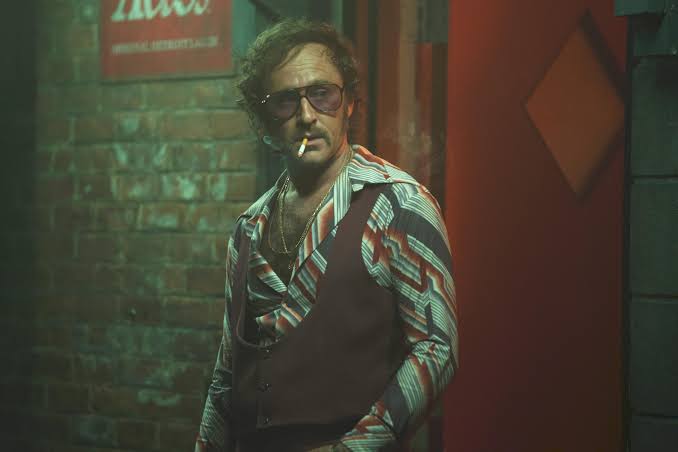
It would be fair to call Motor City’s no dialogue approach somewhat gimmicky, but it is a trick that does work exceptionally well in the moment. One can pick apart the experience afterwards, but it would be a disservice to de-value the entirely infectious vibe with which Motor City proceeds. It is a great time and this “gimmick” does help paper over a rather thin and familiar plot, but seeing Ponciroli experiment with form and embrace the visual language of cinema in the way Motor City does is often exciting. This does not make it perfect, of course, nor does it fully excuse the under-utilization and sidelining a character like Sophia. There are also plenty of moments where Ponciroli feels like he overdoes things, namely a slow-mo scene set to Fleetwood Mac’s ‘Break the Chain’ that feels cut from a different movie. It is the slow-mo that kills the vibe in that scene, as the emotion underlying is effective and the confusion the action that occurs elicits sells the shock and awe at the tragedy that is about to befall Miller for loving the wrong woman. Motor City opens with its climactic showdown between Miller and Reynolds before backtracking to show how it reached that point. Once this scene does play out, it delivers the bloody and battered action hero intensity one craves from a film such as this, but is not only repetitive but rather outlandish. It feels like a sizzle reel from a low-budget superhero movie. Furthermore, Motor City errs in dragging its story beyond this point, well into the present and leaning on poorly applied old age make-up to finally pay off this now decades-long battle of two jealous warring lovers who could never shake Sophia or their hatred for one another.
Stylish and experimental, Motor City’s limited dialogue helps it to carve out a space in the well-trod arena of gritty action or revenge movies. Great cinematography and an impressive cast are a further asset, as though they speak rarely, Alan Ritchson, Shailene Woodley, and Ben Foster all bring an edge to their respective characters and a genuine emotion that they express effectively in their eyes and face with little-to-no words needed to sell their emotional arcs. Ponciroli works around dialogue very well, telling a story that is simple yet well told. There are a few decisions that go awry and its treatment of Sophia is badly dated, but Motor City is a mostly effective and thrilling action film that makes for an enjoyable watch.
Discover more from Cineccentric
Subscribe to get the latest posts sent to your email.


0 comments on “Motor City ★★ ½”