
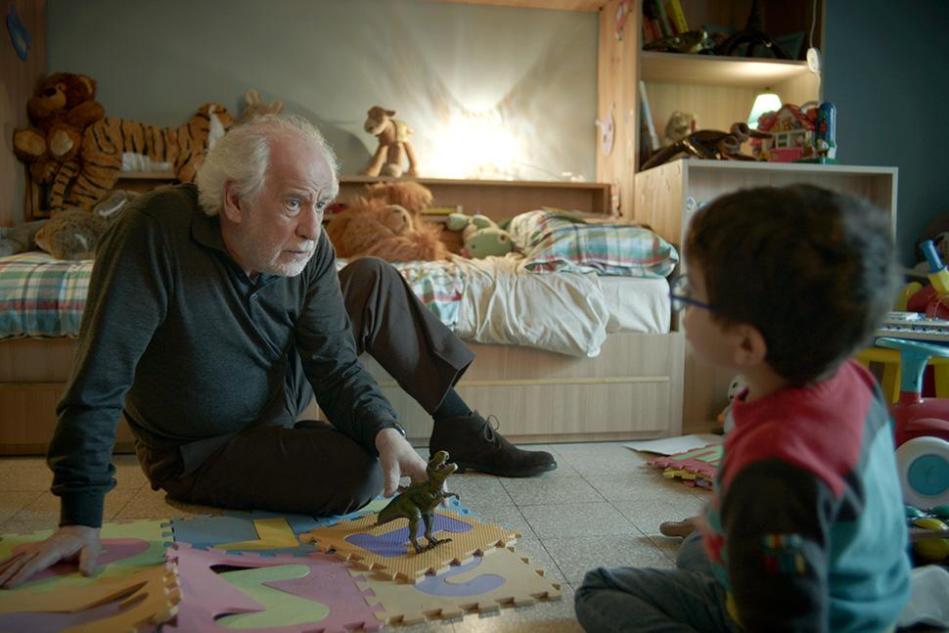
There comes a moment in Mario Martone‘s curious mélange of comedy and creepiness, premiering out of competition at the 83rd Venice Film Festival, when the audience seems as exasperated as Toni Servillo‘s overchallenged protagonist with the perpetual proclamation of the titular term. In the director’s native Italian, Scherzetto means prank or, as it’s used in the sinister story, “gotcha!” The first time it is uttered by Servillo’s septuagenarian Daniele Mallarico, an illustrator whose mental state has aged as unfavourably as his drawings, it’s harmless enough. But every repetition lends the cue word a more uncomfortable undertone, not only on an acoustic level. Childishness from the side of the youngster as much as his caregiver becomes the source of a peculiar psycho-horror.
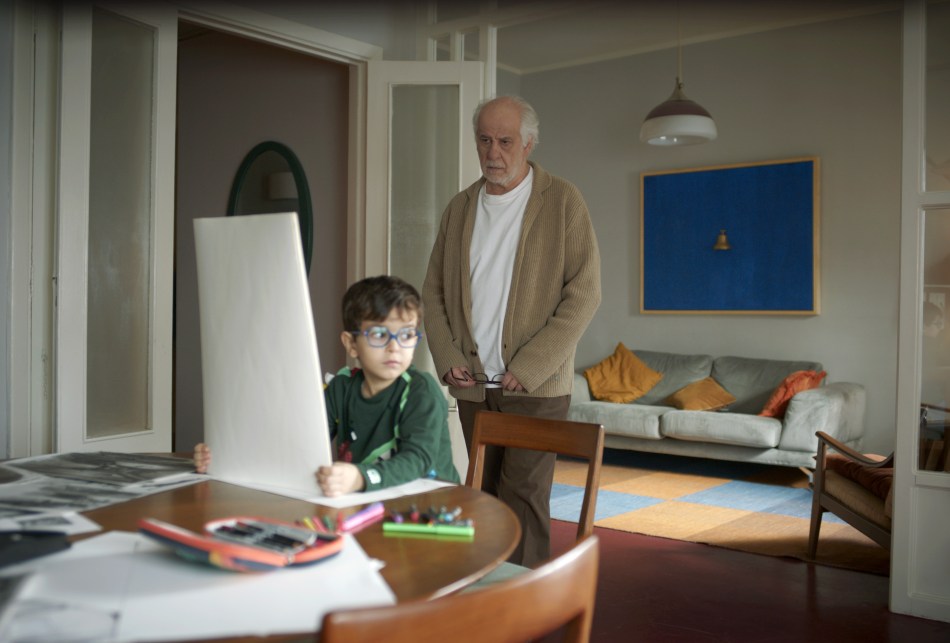
Though the latter grows slowly and stubbornly in the erratic story, written by Martone and Ippolita di Majo based on Domenico Starnone’s eponymous novel, the parabolic and psychological potential of which is ultimately diminished by its volatility. Unpredictability is nevertheless also what keeps driving this strange scenario. Daniele has agreed to babysit his five-year-old grandson Mario (a natural: Lorenzo Perrotta) while his daughter Betta (Serena Rossi) is on an overdue weekend vacation with her husband Saverio (Leonardo Lidi). They are living now in the compact Neapolitan flat that was long ago home to a young Daniele and his extended family. Their ghosts still haunt this place – in a very literal sense, since the protagonist sees them lingering in the rooms.
Whether the spirits are actually there or if they are manifestations of Daniele’s faltering mental capacities remains unclear, just as it’s never established what they represent to him. Sometimes they just seem to be reenacting their former everyday existence, then again they stare at Daniele or gesture towards him. Nothing ever comes from this element that is little more than a presumptuous ranking with the short story he is commissioned to illustrate: Henry James’s “The Jolly Corner”, which sees its protagonist haunted by the man he could have been. Another fraught literary reference points to Homer’s “Odyssey”, the hero of which also forgets who he is. But Daniele hasn’t as much time to ponder his work as he hoped.
Mario demands constant attention, shifting between overly infantile behavior and perilous precociousness. Neither his grandfather nor the audience – and likely also not Martone – can quite figure out if this kid is a sociopath-in-the-making, hiding his malevolence behind naivety, or simply a kid, impulsive and occasionally overwhelmed by unfamiliar situations. One of these occurs as Daniele accidentally locks himself out on the apartment’s tiny balcony. Mario is, or pretends to be, unable to open the balcony door from the inside. With his daughter only due in two days, and no neighbor reacting to his screaming, nightly cold and torrential rainfall turn Daniele’s situation increasingly brutal. His desperate attempts to coax and command his easily distracted grandson into calling for help become the dramatic centre.
Their bizarre mind game is original and absurd enough to keep the uneven domestic drama interesting despite its loose ends and contradictions. Mischievous and uncannily perceptive, Mario impersonates a destabilizing force that orderly Daniele fears and resents. Forced to indulge Mario’s fancy, he joins in make-believe games while on the brink, given his uneasy hold on the balcony also literally, of mental breakdown. Servillo and his little co-actor develop an engaging chemistry but can’t prevent the macabre chamber piece from dragging on too long. Like his protagonist, Martone gets stuck in his own scenario, unable to bring it to any cohesive conclusion or at least compelling escalation. Scherzetto feels itself like a grotesque joke, worth retelling for its sheer oddity.
Discover more from Cineccentric
Subscribe to get the latest posts sent to your email.


0 comments on “Scherzetto ★★½”