
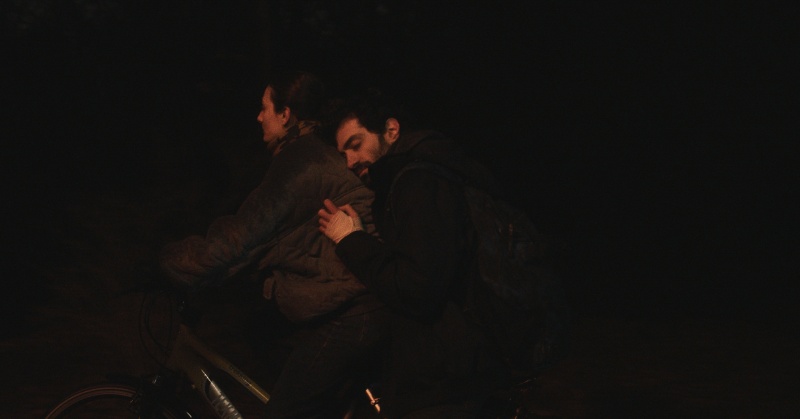
Physical presence is only a painful provisory in Massih Parsaei‘s tender first-time feature, circling with its lonely protagonist through a cold urban landscape in which the longing for affection can only be temporarily numbed. For Iman (Pooyesh Frozandeh), this happens through clandestine nightly encounters in public parks or side alleys. Emotionally and socially, the young Iranian exile remains a stranger in Berlin during a drab, depressing winter. It’s a time when the city reveals its most harrowing side, which can be especially challenging for those who haven’t been conditioned to it since childhood. Parsaei casually captures this site of literal and symbolical coldness in a grey concrete landscape seemingly shaped by feelings of rejection and isolation.
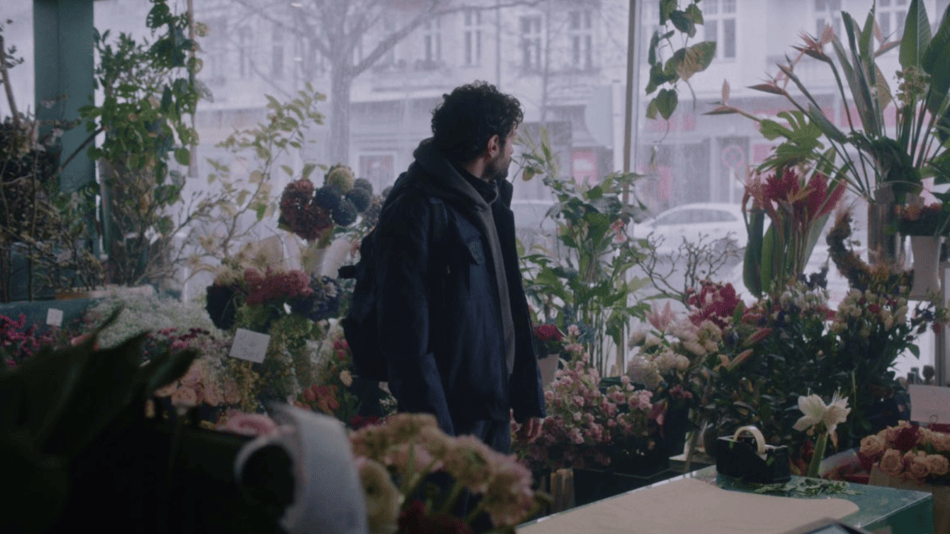
If this sounds dejecting, it’s because it is to a degree. But then again, so is winter in a capital without a hint of holiday cheer. Like many younger inhabitants, Iman juggles two underpaid jobs to get by, at a truck wash and as a personal caregiver for an elderly man. His exhausting routine leaves him little time for socialising, but he is also not the guy keen on it. Buried inside him, his feelings remain unknowable, possibly even to himself. Though he has everyday interactions and the occasional conversation with his colleagues and the sexual partners he secretly meets, he is always careful to keep them at an emotional distance.
This dreary routine is interrupted by the visit of his cousin from Tehran. As Maneli (Ava Darvishi) unintentionally intrudes on Iman’s carefully structured existence, his cousin’s shell of detachment begins to crack. Parsaei crafts the story in a curious form of silent solidarity with his main character by keeping Iman’s past hidden. What brought Iman to Berlin, whether he came voluntarily or forced by outer circumstances, and if there is anything connecting him to the city, remains unclear. Through thoughtful aesthetic associations and psychological parallels, the director-writer turns this blank biographical background into a dramatic tool, reinforcing the omnipresent aura of impenetrable anonymity: a shared experience of isolation that never connects.
As if to protect himself from any form of sympathy, the protagonist tells different stories about his personal circumstances to different people. His colleagues at the truck wash think the old man he cares for is his father. He tells a nurse about a girlfriend with whom he will spend the Christmas holidays. When others try to involve him in communal activities, he makes up stories about other obligations. However, the actual purpose of these fabricated alternative identities is never quite clear. Pooyesh Forouzandeh’s minimalist performance suggests a secret pain haunting his taciturn character, a fear of closeness that might spring from an experience of existential loss.
Even sexuality is presented as an extension of solitude. When his acquaintance from the public park (Marcel Kohler) asks him a personal question, Iman only evades him. Jakob Reinhardt’s cinematography mirrors this utter emotional seclusion with narrow frames and distance shots, looking at Iman from afar with an almost uninterested air. There is hardly any dialogue in this sombre tale of urban isolation in which the topography becomes an externalisation of the protagonist’s inner landscape. His only companion is the city with its gruff people, Brutalist buildings and a history of separation. Maneli’s presence is a faint glimmer of (re)connection, suggesting that there is a way out of the internalised distance of exile.
Discover more from Cineccentric
Subscribe to get the latest posts sent to your email.


0 comments on “Lovers Sleep Alone ★★★”